Cottagecore House Embroidery Pattern 16 Review
First Impressions: A Cozy Winter Cottage Aesthetic
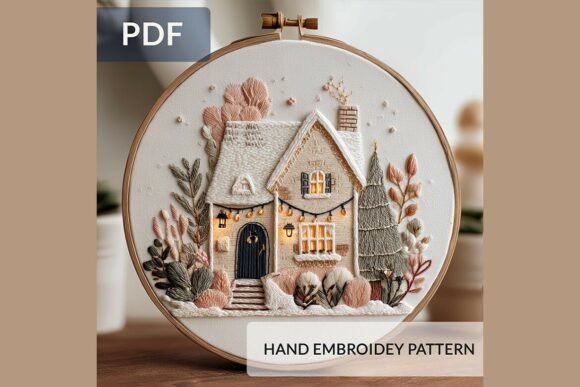
When I first downloaded the Cottagecore House Embroidery Pattern 16, I was immediately drawn to its soft, nostalgic charm. It’s the kind of design that feels like a warm cup of tea on a frosty morning — perfect for winter-themed handmade items or cozy home décor. The illustration captures a whimsical cottage nestled under snow-dusted trees, with smoke curling from the chimney and tiny hearts floating in the air. It’s undeniably sweet, and the level of detail is impressive for a hand embroidery pattern.
As an embroidery designer, I appreciate how the design balances simplicity with enough intricacy to keep the stitching interesting. The use of lines and spacing gives it a hand-drawn feel that’s easy to follow, making it accessible for both beginners and more experienced stitchers. If you're crafting for a holiday market, Etsy shop, or custom gift line, this pattern has the visual appeal to stand out in a crowded space.
Stitching Personality: Practical for Real-World Projects
Now, let’s talk about how the Cottagecore House Embroidery Pattern 16 holds up in actual embroidery work. I tested it on a few different materials to see how it would translate from PDF to finished product. Starting with a cotton tote bag, the design stitched cleanly with minimal distortion. The outlines are well-defined, and the fill areas are sparse enough to avoid overwhelming the fabric but detailed enough to maintain visual interest.
One thing I noticed right away was the balance between satin stitch and running stitch elements. This mix makes the design adaptable to different thread types and textures. I tried it with both standard embroidery floss and a variegated pearl cotton, and both worked beautifully. The satin stitch sections held their shape without puckering, which is a win for anyone planning to use this in custom apparel or baby items where comfort is key.
Small Hoop Size Considerations
Since this is a round hoop pattern, I wanted to see how it scaled down for smaller hoop sizes. Shrinking the design to fit a 4x4 hoop meant some of the finer elements, like the heart accents and window frames, became quite delicate. On light-colored linen, the details held up well, but on a dark cotton twill, the contrast made some lines harder to see. If you're planning to stitch this on darker fabric, I’d recommend using a white or light-colored thread for those smaller elements to maintain clarity.
For embroidered patches or cap designs, where curved surfaces can distort stitching, I found that using a lightweight cutaway stabilizer helped maintain the integrity of the pattern. It’s always a good idea to test on scrap fabric first, especially if you’re working with stretchy materials like sweatshirt fleece or baby knit.
Texture, Durability, and Wash Performance
I stitched the Cottagecore House Embroidery Pattern 16 onto a few different fabric types — from tightly woven cotton to textured burlap and stretchy sweatshirt fleece. The pattern performed best on medium-weight cotton and linen, where the stitches stayed crisp and the details were easy to follow. On burlap, the open weave created a rustic look that I actually loved — perfect for farmhouse-style kitchen towels or pillow covers.
However, I did notice that on stretchy fabrics, some of the straight lines had a tendency to pull slightly after stitching. A light iron and a bit of steam helped relax the fibers and smooth out the design. For items that will be washed frequently, like baby blankets or aprons, I recommend using a tear-away or wash-away stabilizer underneath to reinforce the stitches and prevent fraying.
Commercial Use and Product Value
From a product development standpoint, this pattern has strong commercial potential. Its cozy aesthetic is ideal for seasonal handmade gifts, boutique merchandise, and nursery décor. I can easily picture it on a linen pillow cover for a boutique or stitched onto a cotton baby bonnet for a handmade Etsy listing.
What makes the Cottagecore House Embroidery Pattern 16 stand out is how it enhances the perceived value of a finished item. Because of its detailed yet approachable design, it gives handmade products a polished, artisanal feel that can justify a higher price point. It also photographs beautifully — soft lighting and a rustic backdrop really make the design pop, which is important for product listings and social media marketing.
Licensing and File Details
Before using this pattern for commercial purposes, I recommend double-checking the file details and licensing terms directly on the Creative Fabrica product page. While the design is listed as a PDF hand embroidery pattern, it’s always wise to confirm whether it includes commercial use rights, especially if you’re planning to sell finished items or create printable mockups.
Also, take a close look at the file structure. Some digital embroidery files include multiple hoop sizes or color-separated layers, which can be helpful for planning your stitching order and thread changes. Since this is a hand embroidery pattern, it likely includes clear line art and color guides rather than machine stitch data, so it’s best suited for manual stitching rather than machine embroidery designs.
Final Thoughts: A Versatile Design for Cozy Creations
Overall, the Cottagecore House Embroidery Pattern 16 is a charming, versatile design that works well across a range of handmade and commercial projects. Whether you're creating a custom sweatshirt for a customer, a personalized patch for a boutique line, or a cozy kitchen towel for a craft fair, this pattern delivers both visual appeal and stitching satisfaction.
It’s the kind of design that feels timely — perfect for winter markets, holiday collections, or year-round cottagecore-themed items. Just remember to test on scrap fabric, check thread contrast on different backgrounds, and confirm all licensing details before selling finished products. With a little care and attention, this embroidery pattern can become a staple in your creative toolkit.