Sand in My Hair, Beach Vibe Embroidery
First Impressions: A Summer Story in Stitches
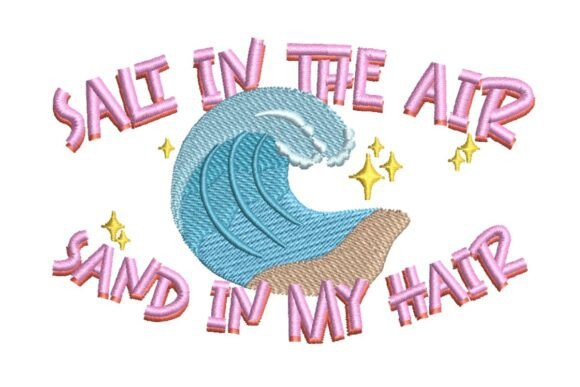
Opening the file for Sand in My Hair, Beach Vibe Embroidery, the first thing that strikes me is the relaxed, sun-drenched energy it brings. It’s not just a design — it’s a mood. The layout blends soft lettering with subtle coastal imagery like waves or seashells, creating a visual that feels both playful and polished. It’s the kind of embroidery that instantly makes you think of sandy toes, ocean breezes, and long summer days. As a designer, I immediately start brainstorming where this would look best: a linen tote for a boutique, a personalized baby onesie, or a custom sweatshirt for a coastal-themed gift line.
Real-World Use: From Sweatshirts to Tote Bags
I tested Sand in My Hair, Beach Vibe Embroidery on a few different fabric types to get a sense of how it would hold up in actual projects. Starting with a mid-weight cotton tote bag, the design stitched out cleanly with minimal thread breaks and good coverage. The satin and fill stitches worked together well, giving the letters enough dimension without feeling bulky. On a heavier sweatshirt fabric, the same design added a nice pop of personality without overwhelming the garment. It scaled well, too — a key consideration for Etsy sellers or small shop owners who may want to offer variations in size for different products.
For a baby project, I stitched it onto a lightweight gauze onesie. The design held up nicely, though I did use a lightweight stabilizer to prevent puckering. It’s important to keep in mind that while the design has a whimsical feel, the lettering is fairly tight in places, so on very soft or stretchy fabrics, you may need to adjust your stabilizing technique.
Where to Use It Carefully
As with any detailed embroidery design, there are fabrics and placements where Sand in My Hair, Beach Vibe Embroidery needs a little more attention. I wouldn’t recommend it for very small hoop sizes — the lettering can get too compressed, and the details start to blur. On textured or loosely woven fabrics like burlap or linen blends, the stitch coverage may not be dense enough to fully define the design unless you add an extra layer of lightweight tear-away stabilizer.
Dark fabrics also require some thought. The original thread colors are likely light and sandy, so if you're using this on navy or black garments, you’ll want to test thread color contrast carefully. I found that switching to a slightly bolder thread palette helped maintain the legibility and charm of the design on darker backgrounds.
Also, be cautious when placing it on curved surfaces like caps or around the seams of a tote bag. The corners of the design are delicate, and distortion can happen if the fabric isn’t taut in the hoop. For embroidered patches, this design works well on flat, stable materials like felt or twill but may need slight resizing to fit standard patch dimensions.
How It Elevates Your Finished Product
One of the things I appreciate most about this design is how it enhances the perceived value of a product. Whether it’s stitched onto a boutique tote or a custom pillow cover, the design adds a handmade, thoughtful touch that resonates with customers. For Etsy sellers or craft entrepreneurs, that’s huge. It gives your product a story, a sense of place, and a visual hook that’s easy to market.
From a branding standpoint, Sand in My Hair, Beach Vibe Embroidery could easily become part of a cohesive summer collection. It’s versatile enough to be used across different product types — from personalized gifts to small business merchandise — and consistent enough in style to reinforce a coastal or lifestyle brand. For digital product sellers offering embroidery files or mockups, this design could serve as a strong centerpiece for a themed bundle.
Designer Notes: Stitching It Right the First Time
Before you commit to stitching this design on a client project or production run, I highly recommend running a test on scrap fabric first. Check the stitch density — especially in the lettering — and make sure the colors you’re using contrast well with your fabric. If you're using a light thread on a light background, the design might not stand out as intended.
Also, test it on both light and dark backgrounds to see how the thread colors translate. If you're using your own thread palette, be sure the satin stitches aren’t too tight, which can cause puckering, or too loose, which can leave gaps. For a more professional finish, especially on commercial projects, consider doing a black and white mockup first to evaluate the balance of negative space and solid areas.
Don’t forget to check the hoop size and file compatibility with your machine. If the design includes applique elements or layered stitches, make sure your embroidery software can handle the format. And if you're selling finished items or digital embroidery files, confirm the licensing terms — it’s a small step that can save you from big headaches later.
Final Thoughts: A Versatile Summer Staple
Sand in My Hair, Beach Vibe Embroidery is more than a seasonal design — it’s a versatile tool for any embroidery business. Whether you're creating personalized gifts, boutique apparel, or digital design assets, this embroidery file brings a sense of warmth and storytelling to your work. It’s not overly complex, which makes it accessible for both hobbyists and pros, but it has enough visual interest to stand out in a crowded market.
For small business owners and Etsy sellers, this is the kind of design that can anchor a summer product line. For designers, it’s a solid addition to your creative toolkit. Just be mindful of fabric choices, stabilizer use, and color contrast — and you’ll get a clean, charming result every time.